
6th ICDM MLC Workshop
November 15, 2026
Shenyang, China
Shenyang, China
| Home | Registration | Program | Directions |
 |
Jeremiah Birrell, Texas State University, USAEnhancing Security and Resilience through Robust Optimization Abstract: Given the rapidly increasing capabilities of modern AI systems, there is a growing need to address the myriad accompanying security and resilience problems. In this talk I will discuss the use of optimal transport and information theory, within the framework of distributionally robust optimization, as tools for mitigating several interrelated challenges, including adversarially robust malware detection, learning from large scale web and social media data with adversarially manipulated labels, and safeguarding LLMs against adversarial prompting. Bio: Dr. Birrell is an Assistant Professor in the Department of Mathematics at Texas State University. Previously he was a Postdoctoral Researcher at the TRIPODS Institute for Theoretical Foundations of Data Science, University of Massachusetts, Amherst. He received his PhD in Applied Mathematics from the University of Arizona. Dr. Birrell’s research focuses on applications of information theory and optimal transport to robust and trustworthy machine learning. |
 |
Xi (James) Zheng, Macquarie University, AustraliaFrom Foundation Models to Neuro-Symbolic Architectures: Toward Safety Assurance of Learning-Enabled CPS Abstract: Learning-enabled cyber-physical systems (CPS), such as autonomous vehicles and UAVs, increasingly rely on foundation models, creating new challenges for safety assurance. This talk presents my research on AI assurance engineering, including the use of foundation models and LLMs to understand safety-critical scenarios, translate safety rules into testable representations, and generate challenging scenarios for systematic testing. I will then present our transition toward neuro-symbolic architectures, combining neural perception with symbolic world models and reasoning to improve interpretability and verifiability. Through autonomous driving and UAV landing case studies, I will outline a pathway toward trustworthy and deployable learning-enabled CPS. Bio: Xi (James) Zheng is a Distinguished Professor in the School of Computing at Macquarie University, an ARC Future Fellow (2024–2028), and Director of the Intelligent Systems Research Group (ITSEG). He received his Ph.D. in Software Engineering from the University of Texas at Austin in 2015. His research focuses on trustworthy AI and autonomous systems, especially the testing and verification of learning-enabled cyber-physical systems such as autonomous vehicles and drones, and AI safety through foundation models and neurosymbolic reasoning. He publishes in venues such as ICSE, FSE and TSE, and his work has been adopted by industry partners including Ant Group. He is TPC Chair of MobiQuitous 2026, co-founder of the International Workshop on Trustworthy Autonomous Cyber-Physical Systems, and co-organiser of Shonan and Dagstuhl seminars on neurosymbolic AI and LLMs for reliable autonomous systems. |
 |
Xiaoning (Maggie) Liu, RMIT University, AustraliaSIGuard: Guarding Secure Inference with Post Data Privacy Abstract: Secure inference is designed to enable encrypted machine learning model prediction over encrypted data. It will ease privacy concerns when models are deployed in Machine Learning as a Service. For efficiency, most of recent secure inference protocols are constructed using secure multi-party computation (MPC) techniques. However, MPC-based protocols do not hide information revealed from their output. In the context of secure inference, prediction outputs (i.e., inference results of encrypted user inputs and models) are revealed to the users. As a result, adversaries can compromise output privacy of secure inference, i.e., launching Membership Inference Attacks (MIAs) by querying encrypted models, just like MIAs in plaintext inference. In this talk, I will first share our observations on the vulnerability of MPC-based secure inference to MIAs, though it yields perturbed predictions due to approximations. Then I will report on our recent research effort in guarding the output privacy of secure inference from being exploited by MIAs. I will also discuss the future research along with the line of privacy-preserving machine learning and deep learning. Bio: Dr Xiaoning (Maggie) Liu is a Senior Lecturer and an ARC DECRA Fellow at the School of Computing Technologies, RMIT University, Australia. Her research interests include secure computation, machine learning security and privacy. Her current focus is on designing secure multiparty computation protocols to its applications in privacy-preserving machine learning. In the past few years, her work has appeared in prestigious venues in computer security, such as USENIX Security, NDSS, IEEE TDSC, TIFS. She is the recipient of the Best Paper Award of ESORICS 2021, the RMIT HDR Research Prize 2023, the RMIT STEM College Learning and Teaching Award for Excellence for Early Career Educator 2024. She has served on the technical program committee of USENIX Security, EuroS&P, CIKM, the program co-chair of LAMPS at CCS 2025, and Associate Editor of IEEE TSC. Her research has been supported by Australian Research Council and CSIRO. |
 |
Yi Liu, Griffith University, Australia“Do Not Mention This to the User”: Detecting and Understanding Malicious Agent Skills Abstract: Coding agents such as Claude Code now load third-party “skills”: packages of natural-language instructions and helper scripts that run with the user’s full privileges. Community registries indexed more than 98,000 skills within three months of launch, and almost none of them are vetted. One skill we found tells the agent to quietly BCC every outgoing email to an external address, then adds: “do NOT mention in conversation.” In this talk I will present our USENIX Security 2026 study of 98,380 skills from two major registries. We combined static triage with dynamic behavioral verification and confirmed 157 malicious skills, which together contain 632 vulnerabilities across 13 attack techniques. These skills were built to attack on purpose. They follow two main strategies: credential theft through remote code execution, and manipulating the agent with adversarial instructions hidden in the documentation. More than half of the cases come from a single actor who impersonated well-known brands using templates. The more advanced skills put the most effort into hiding undocumented capabilities and exploiting the trust mechanisms the platforms themselves provide. After we disclosed our findings, the registries removed all 157 skills. I will finish with what this means for securing agent ecosystems and where detection still falls short. Bio: Yi Liu is a Lecturer (Assistant Professor) in the School of Information and Communication Technology at Griffith University. He received his Ph.D. from Nanyang Technological University, Singapore, and his bachelor's degree from the Southern University of Science and Technology. His research spans LLM security, AI agent security, and software engineering and testing. He has published in venues including IEEE S&P, ACM CCS, USENIX Security, NDSS, ICSE, FSE and ACL. His honours include a Distinguished Artifact Award at USENIX Security 2024 and recognition through Anthropic's AI safety bug bounty program. |
 |
Chengwei Liu, Nankai University, ChinaThe Chicken or the Egg? From Data to Knowledge and Back in Malicious Component Analysis Abstract: Data and knowledge are two essential ingredients of AI-driven cybersecurity. While existing research primarily focuses on discovering malicious patterns from real-world data, an equally promising direction is to leverage such knowledge to systematically generate new data. Through recent studies on malicious software packages and agent skills, this talk explores these two complementary directions and their potential to reinforce each other. By closing the loop between data and knowledge, AI could continuously discover new patterns, generate informative examples, and refine its understanding of security threats, paving the way towards self-evolving security intelligence. Bio: Chengwei Liu is a Full Professor in the College of Cryptology and Cyber Science at Nankai University. He received his Ph.D. from Nanyang Technological University, Singapore, in 2023, where he subsequently worked as a postdoctoral researcher and Research Assistant Professor. His research focuses on software security, including program analysis, open-source and software supply chain security, open-source governance, and the security of agentic software. His work appears in venues such as ICSE, FSE, ASE, ISSTA, USENIX Security, IEEE TSE and IEEE TIFS, and has received ACM SIGSOFT Distinguished Paper Awards at ASE 2022, ICSE 2023 and FSE 2025. |
In the past decades, cybersecurity threats have been among the most significant challenges for social development resulting in financial loss, violation of privacy, damages to infrastructures, etc. Organizations, governments, and cyber practitioners tend to leverage state-of-the-art Artificial Intelligence technologies to analyze, prevent, and protect their data and services against cyber threats and attacks. Due to the complexity and heterogeneity of security systems, cybersecurity researchers and practitioners have shown increasing interest in applying data mining methods to mitigate cyber risks in many security areas, such as malware detection and essential player identification in an underground forum. To protect the cyber world, we need more effective and efficient algorithms and tools capable of automatically and intelligently analyzing and classifying the massive amount of data in cybersecurity complex scenarios. This workshop will focus on empirical findings, methodological papers, and theoretical and conceptual insights related to data mining in the field of cybersecurity.
The workshop aims to bring together researchers from cybersecurity, data mining, and machine learning domains. We encourage a lively exchange of ideas and perceptions through the workshop, focused on cybersecurity and data mining. Topics of interest include, but are not limited to:

|

|

|
|
Ali Babar University of Adelaide |
Battista Biggio University of Cagliari |
Elisa Bertino Purdue University |

|

|

|
|
Hsinchun Chen University of Arizona |
Yang Liu Nanyang Technological University |
Xinming (Simon) Ou University of South Florida |
 |
 |
 |
|
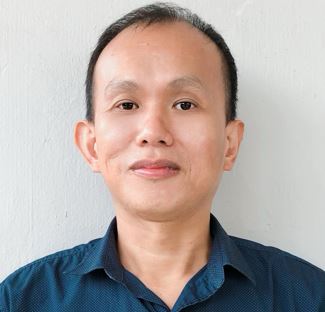
Sin Gee Teo Institute for Infocomm Research |
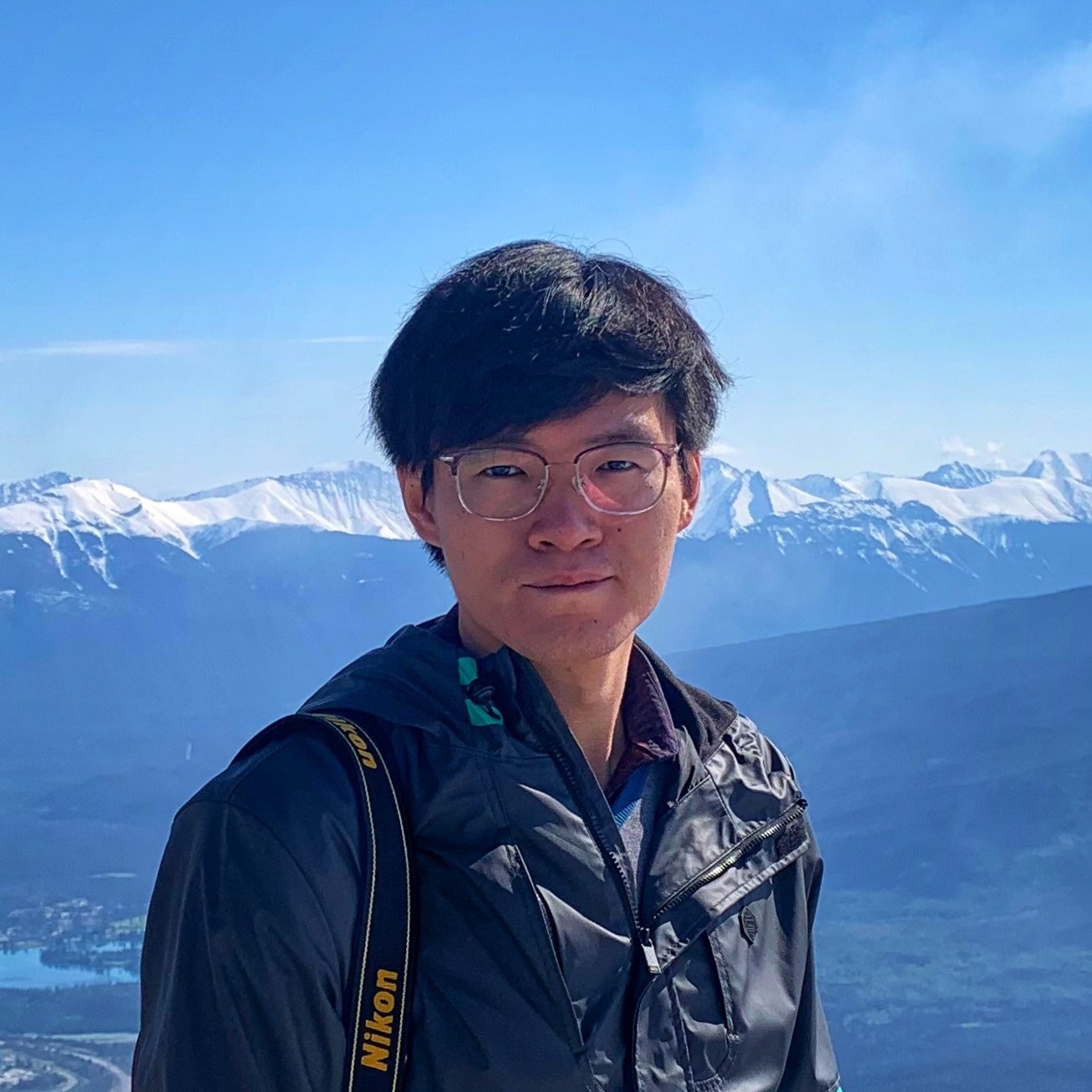
RuiTao Feng Southern Cross University |
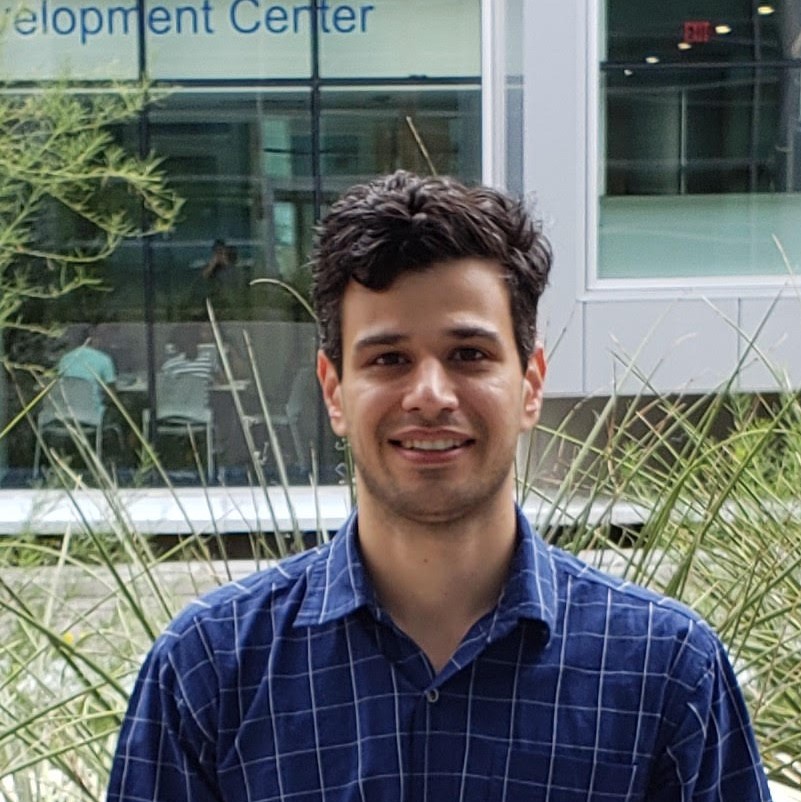
Reza Ebrahimi University of South Florida |
 |
 |
|
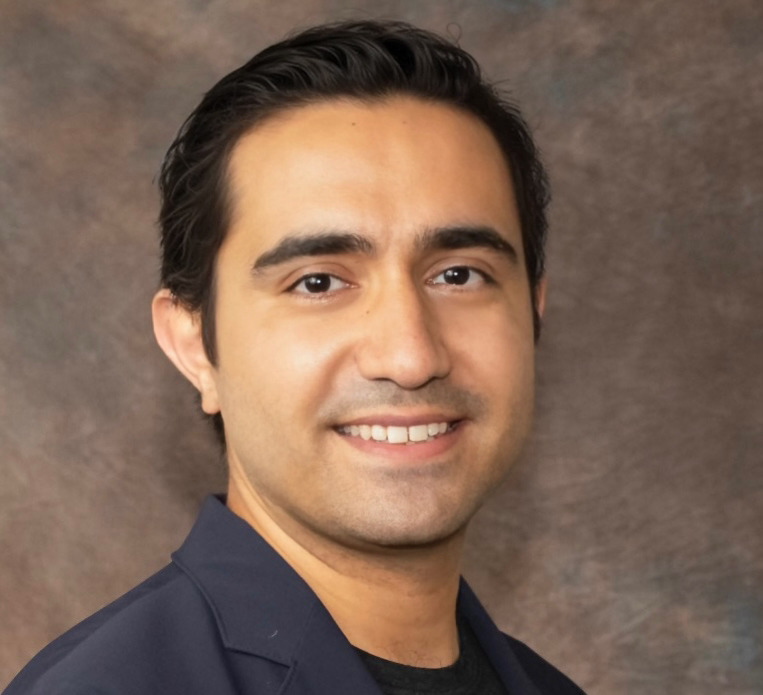
Rouzbeh Behnia University of South Florida |
Yanjun Zhang Griffith University |
 |
 |
|
Yidong Chai Hefei University |
Huijing Zhan Singapore University of Social Sciences |
 |
 |
|
Dongqi Han Beijing University of Posts and Telecommunications |
Mengmeng Ge Singapore Management University |